
When I joined LoopStudio almost three years ago, I first opened our Notion workspace.
I went to the homepage, expecting to find runbooks, day-to-day guides, or practical resources.
But what truly caught my attention was a highlighted quote at the top, more prominent than anything else:

This quote marked my first day and is more relevant than ever today with LoopStudio’s core value: quality.
Today, this value translates into our mission to exceed client expectations through a mindset of continuous improvement, constantly auditing and optimizing our processes.
Quality is embedded in LoopStudio’s DNA; it transcends projects, people, and industries.
This approach has been key to why companies in critical sectors such as cybersecurity – where quality is non-negotiable – have chosen us as their strategic partner for software development.
Security and Quality: two sides of the same coin
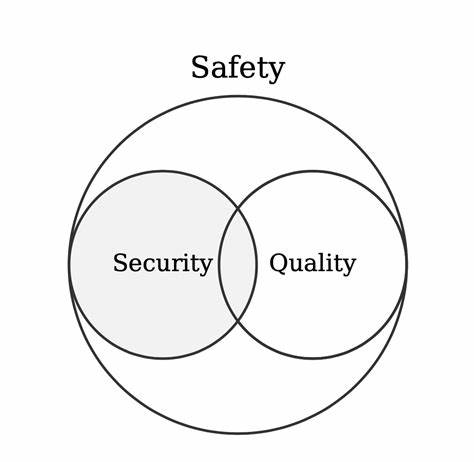
We often picture hackers, firewalls, or encryption when we think about security or cybersecurity. However, there are more fundamental aspects that directly affect any software company, such as:
- Preventing bugs from exposing sensitive information.
- Ensuring default configurations do not create vulnerabilities.
- Guaranteeing that the system remains operational and avoiding downtime that affects revenue and reputation.
- Keeping system response times consistent, even under load.
- Securing deployment processes to prevent credential leaks.
Creating a secure system is not something left for the end of the process; it begins with requirement analysis, continues with architectural design, is strengthened during implementation, and validated with exhaustive testing.
The development practices we define from the start are critical to building secure, high-quality software.
Raising the bar: A focus on the Cybersecurity industry
Being a trusted software development partner for cybersecurity companies has been a strategic goal for LoopStudio.
For example, we partnered with clients to develop platforms like an attack surface management product – handling the backend, frontend, UX/UI, and product evolution – while they provided the cybersecurity expertise.
Similarly, we collaborated on other solutions, such as firmware vulnerabilities management platforms, where the client brought the ideas and cyber knowledge, and we delivered the web development expertise.
Over the past year, we’ve committed to being quality providers one step further, particularly in the cybersecurity industry.
We’ve immersed ourselves even deeper into its practices and standards to provide a service that meets and exceeds expectations.
3 Core pillars of our approach
To achieve this level of excellence, we’ve identified three fundamental pillars that guide our approach:
1. Organizations and standards

The cybersecurity industry has well-defined standards by leading organizations like NIST and CISA. Frameworks such as the Secure Software Development Framework (NIST) and Secure by Design (CISA) have been cornerstones of our process.
These standards are broad, and their application depends on context.
At LoopStudio, we’ve analyzed their interpretation based on our needs and developed a practical approach that adds value to other industries.

Figure: Dissecting Secure Software Development Framework
2. Collaboration with Experts
Working with experts is essential in a vast and dynamic field like cybersecurity.
We’ve been fortunate to collaborate with Robert Rounsavall, a client and CISO advisor with over 20 years of experience. His validation has allowed us to move forward with confidence and precision.
3. Training and Certifications

To implement security, our team has undergone continuous training and integrated practices from organizations such as OWASP and SafeCode.
These practices, aligned with the concept of the Secure Software Development Lifecycle (SSDLC), are becoming an integral part of our methodology.
What is SSDLC and why is it Important?

The Secure Software Development Lifecycle (SSDLC) is a structured approach to integrating security into every phase of software development.
It goes beyond traditional development by ensuring that security is not an afterthought but an essential part of the product from conception to maintenance.
Why is it important?
- Reduces costs: Detecting vulnerabilities early is much cheaper than fixing them in production.
- Protects reputation and revenue: Prevents security breaches and damage to client trust.
- Promotes a culture of security: Makes security a shared responsibility.
- Improves software quality: Reduces errors and creates robust, reliable products.
How to train your team in SSDLC
Training a team in Secure Software Development Life Cycle (SSDLC) requires a structured approach that combines education, practice, and an organizational culture committed to security.
Here’s a roadmap we’ve found useful at LoopStudio:
1. Build a strong foundation
It’s crucial to start with fundamental concepts, as not all team members will have the same level of knowledge.
Here are some initial resources:
- Cybersecurity Essentials (LFC108):
This introductory course teaches basic cybersecurity principles, ideal for employees who want to protect their digital practices in both personal and professional settings. - Security Development Lifecycle 101 (SAFECode):
This course teaches the fundamentals of the Secure Software Development Lifecycle (SDL), helping teams integrate security into all development phases. It includes practical assessments to reinforce learning.
2. Operational security practices
To strengthen the security of our day-to-day operations, we’ve adopted tools and practices such as:
- Password Managers: Encouraging team members to store and manage passwords securely, reducing risks of breaches due to weak or reused passwords.
- Apple Business Manager: Leveraging this tool to centrally manage and secure our devices, ensuring that work equipment remains compliant with security policies and reducing the risk of unauthorized access or data leaks.
3. Specific topics and advanced skills
Once the fundamentals are clear, the team can tackle more advanced topics. Key areas and resources include:
- Threat Modeling 101:
A course that explains how to execute basic threat models, identify risks, and design solutions during the planning phase. - System Hardening 101:
Introduces system hardening concepts, providing guidance on how to strengthen systems and reduce attack surfaces. - OWASP Top 10 Security Threats:
Focuses on identifying and mitigating the 10 most critical vulnerabilities in web applications, as defined by OWASP. - Developing Secure Software (LFD121):
Offers tools and practices for building resilient software, covering everything from requirement analysis to vulnerability response.
4. Apply knowledge: Workshops and specialized roles
After learning, it’s time to put knowledge into action. The team can participate in practical activities such as:
- Threat Modeling workshops: Identify risks and design tailored strategies to mitigate them.

- Defining best practices: Develop customized secure coding guidelines for each project.
Specialized roles can also focus on distinct responsibilities:
- QA Engineers: Conduct penetration testing using tools like Burp Suite, which also offers advanced certifications.
- Developers: Practice with hands-on labs such as PortSwigger Web Security Labs, a leading resource for web security learning.
5. Advanced certifications
At Loopstudio, we highly value these certifications because they are offered by renowned organizations and require a high level of expertise to obtain. These certifications not only demonstrate technical proficiency but also align with industry standards for secure software development and cybersecurity practices.
Moreover, we are committed to mapping these certifications to the DoD 8140 (the successor to DoD 8570) requirements. By doing so, we ensure that our team’s capabilities meet the rigorous standards set by the Department of Defense for cybersecurity and secure software development.
CSSLP (Certified Secure Software Lifecycle Professional):
Validates advanced knowledge in integrating security throughout the SDLC. It covers secure architecture, supply chain management, threat modeling, and more.

Cyber Secure Coder (CSC):
Focuses on identifying and mitigating common data and system threats. Recognized by the U.S. Department of Defense under Directive DoDD 8140, it demonstrates a solid foundation in secure coding.

Conclusion
At LoopStudio, we’ve learned that security and quality are not independent goals but two sides of the same coin.
Our experience in cybersecurity projects has shown that investing in solid frameworks, continuous training, and collaboration with experts strengthens our products and positions us as trusted partners in the industry.
Implementing practices like SSDLC prevents errors and vulnerabilities and fosters a culture of excellence that benefits the entire team and, ultimately, our clients.
If you’re leading a development team, consider how you can apply these practices in your context.
Quality and security must be the foundation of any innovative project.
And remember: well-built software transcends industries, teams, and challenges, leaving a lasting impact.

